
 July 12, 2024
Fire will play its natural role in the forest before crews contain it
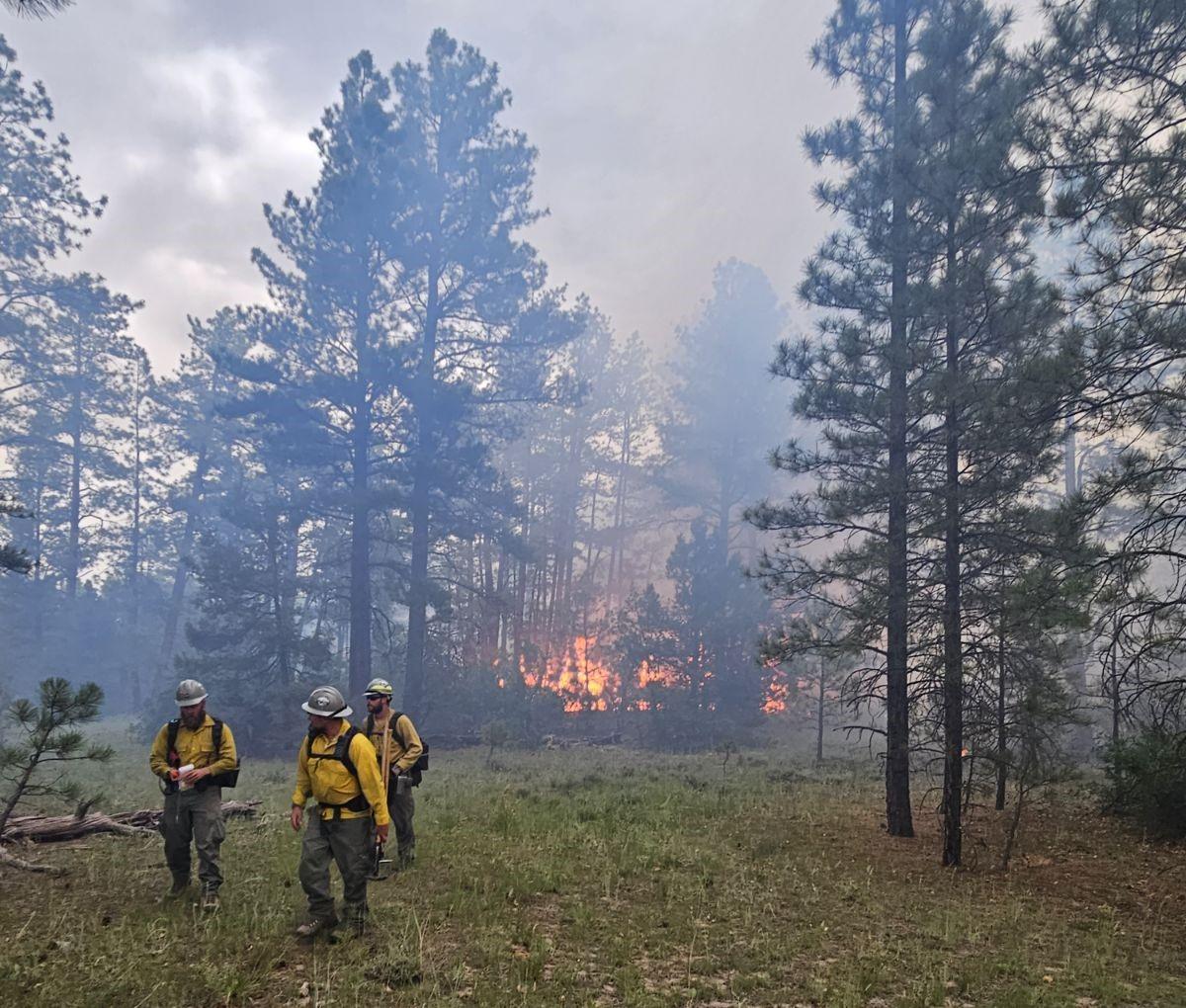
Carson National Forest fire managers will move forward with a strategy to indirectly suppress the naturally caused Yeso Fire. For fire crew safety, they plan to contain it primarily within existing roads.
“After reviewing all the data, I believe this is the best approach to balance what Mother Nature has given us while keeping our crews and the public safe,” said District Ranger Angie Krall, referring to the lightning that caused the fire. “There’s been plenty of rain, with a lot more forecasted, so I’ll take what we can get to restore this small section of forest.”
The strategy is called “confine and contain.” Crews will manage the fire within a predetermined area (confine) and use points to stop the fire’s spread (contain). In this case, crews will conduct firing operations within a 600-acre area as early as July 13 and use roads as containment lines.
The Yeso Fire was first reported on July 9 by fire personnel in the Deadman Lookout on the Santa Fe National Forest. Carson National Forest crews have since monitored the fire, which has grown to 96 acres.
There are no current evacuations or closures associated with the fire, which is burning southeast of Canjilon and northeast of Ghost Ranch. Visitors and residents may observe smoke. Hikers on nearby trails (Continental Divide National Scenic Trail and Yeso Trail) or visitors on nearby Forest Service roads may see flames and encounter fire personnel.
The public can get updates on InciWeb or by calling public information officers at 505-216-6793. Smoke sensitive residents can call to borrow a limited number of portable HEPA air filters.
An overview of the fire, including strategy, fire ecology and how it plays into larger initiatives is available online.
The Yeso Fire is primarily burning in a ponderosa pine forest, where fire was historically frequent and low severity. Fire managers expect to observe some moderate severity fire, in which single trees or stands are fully consumed. Such effects help return the forest to historic conditions, where stands are less dense with openings in the canopy. This, along with standing dead and down trees, are beneficial for wildlife.
The strategy for this fire is part of larger initiatives to benefit residents and downstream cities.
Since 2011, Forest Service staff and partners have invested over $10 million in the Canjilon Wildland Urban Interface Project immediately to the north of the Yeso Fire. Many adjacent private landowners, with the assistance of the state, are contributing by thinning and applying prescribed fire on their own properties.
The fire is also within the expansive two-state Rio Chama Collaborative Forest Landscape Restoration Project, where governments and partners are coming together to address forest and watershed health that is critical to local communities and downstream urban areas.
Nationally, the Forest Service is implementing the Wildfire Crisis Strategy to increase the pace and scale of work to reduce risk from wildfire.


 NM Fire Info
Comments are closed.